Welcome to the Han Lab
At Han Lab, we drive the next generation of medical artificial intelligence to elevate human expertise to a global scale. Our mission is to build powerful AI and machine learning systems that redefine diagnosis, accelerate discovery, and improve patient outcomes. By uniting breakthroughs in algorithmic innovation, massive multimodal data integration, and clinically validated impact studies, we aim to transform the practice of radiology, emergency medicine, and the broader landscape of precision healthcare.
Apply to JoinLatest publication · July 22, 2026
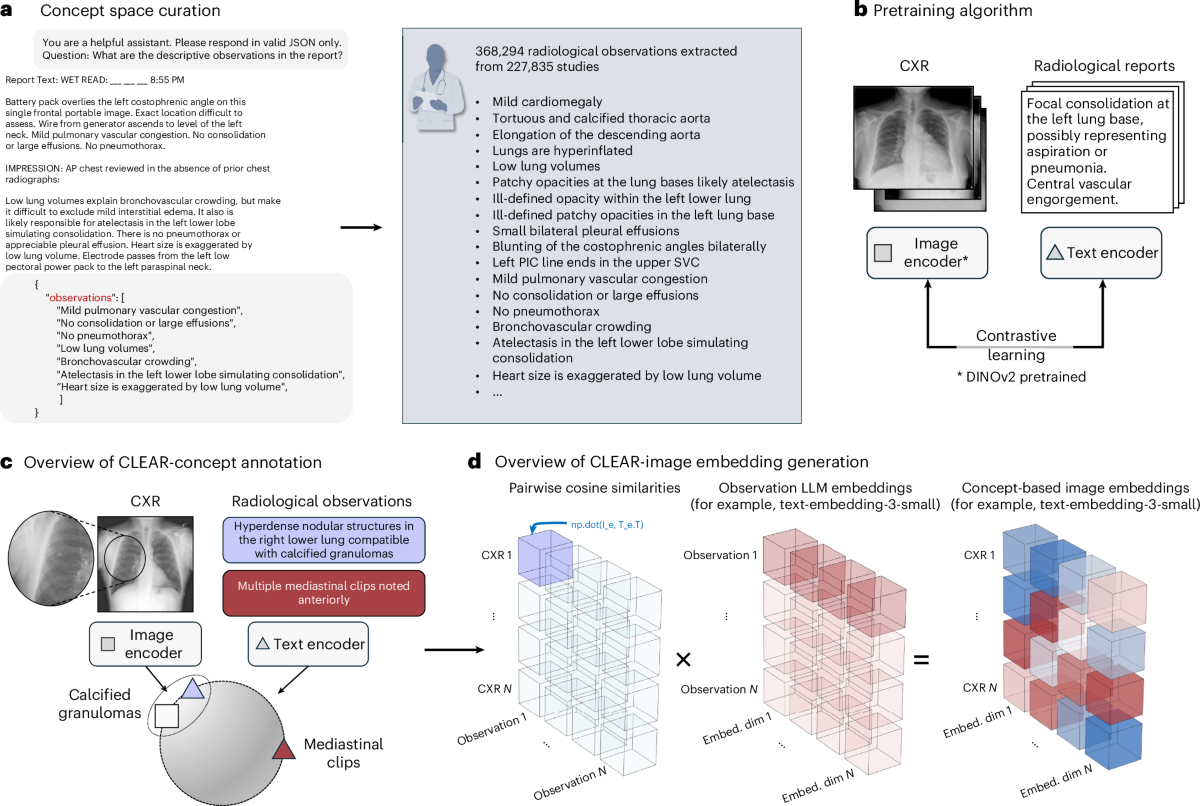
An AI model can be right for the wrong reason. CLEAR makes the reason visible.
Published open access in Nature Biomedical Engineering
CLEAR maps chest X-rays into a space of 368,294 radiological observations, making predictions inspectable at the level of clinical concepts. It was trained on more than 0.87 million image–report pairs from 239,391 patients and enables model auditing, confounder discovery, and concept-level intervention.
- 0.87M+image–report pairs
- 239,391patients
- 368,294radiological observations
Lab Members
- Prof. Tianyu Han · Principal Investigator
- Akis Giannoukos · PhD Student
- Tiancheng Bao · PhD Student
- Niel Chen · Master RA · NYU
- Yicheng Li · Master RA
- Jessica Incmikoski · Coordinator
- + Join the Lab

Research
Our group leads the development of next-generation Generative and Agentic Medical AI systems that reason like clinicians, integrate diverse data modalities, and communicate seamlessly through images and language.
Generative AI
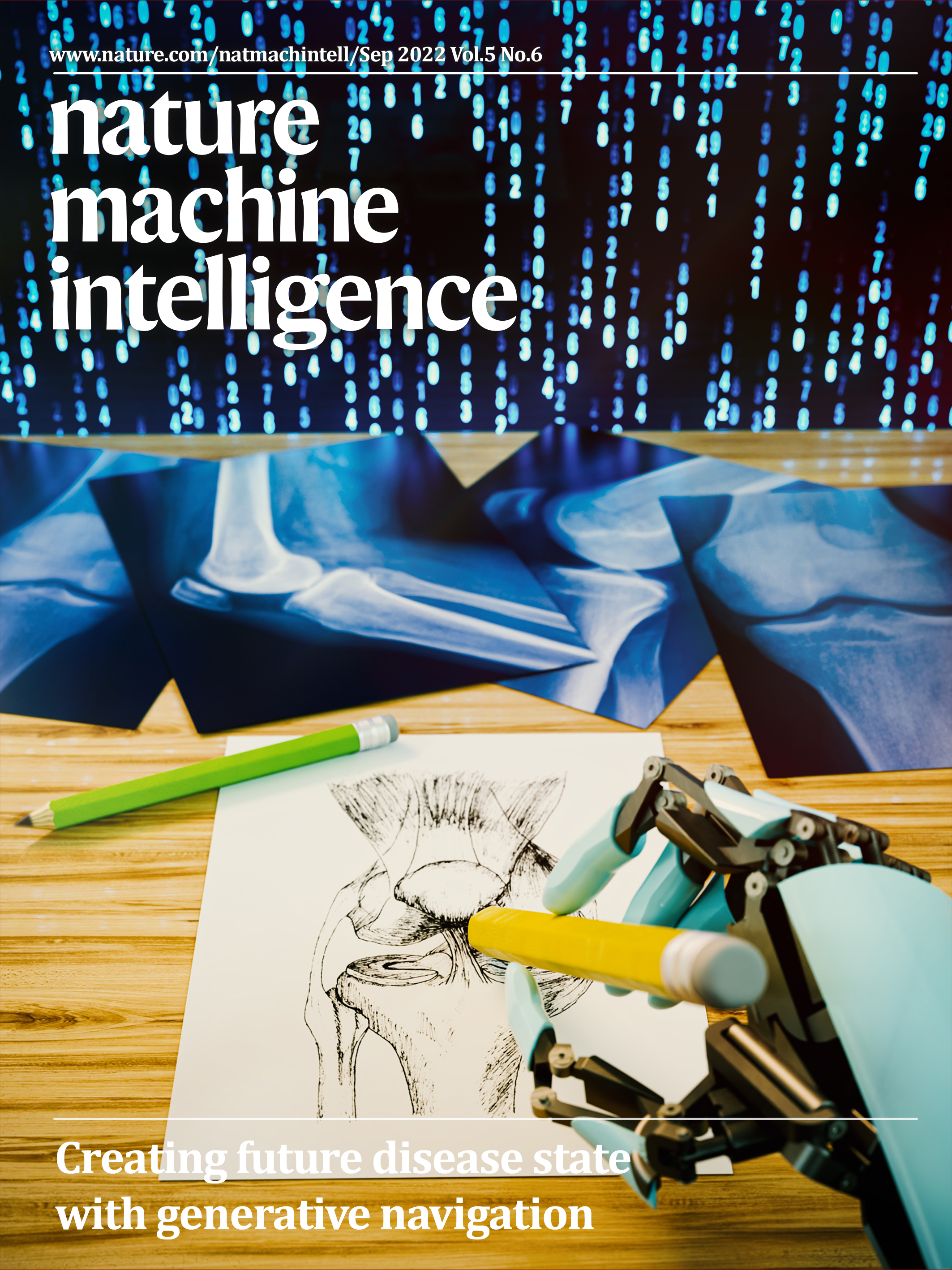
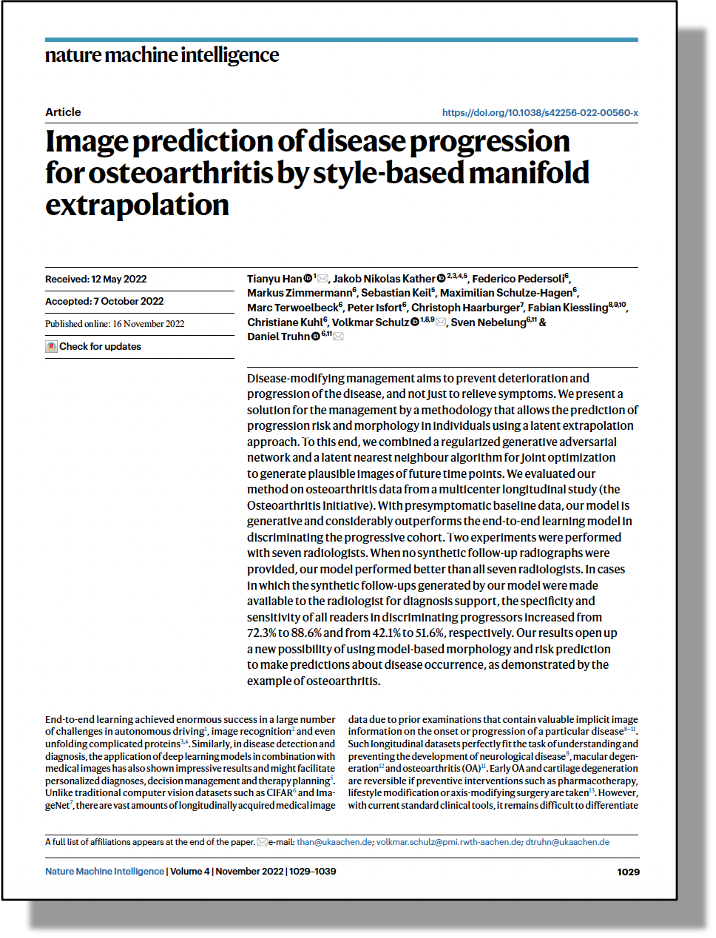
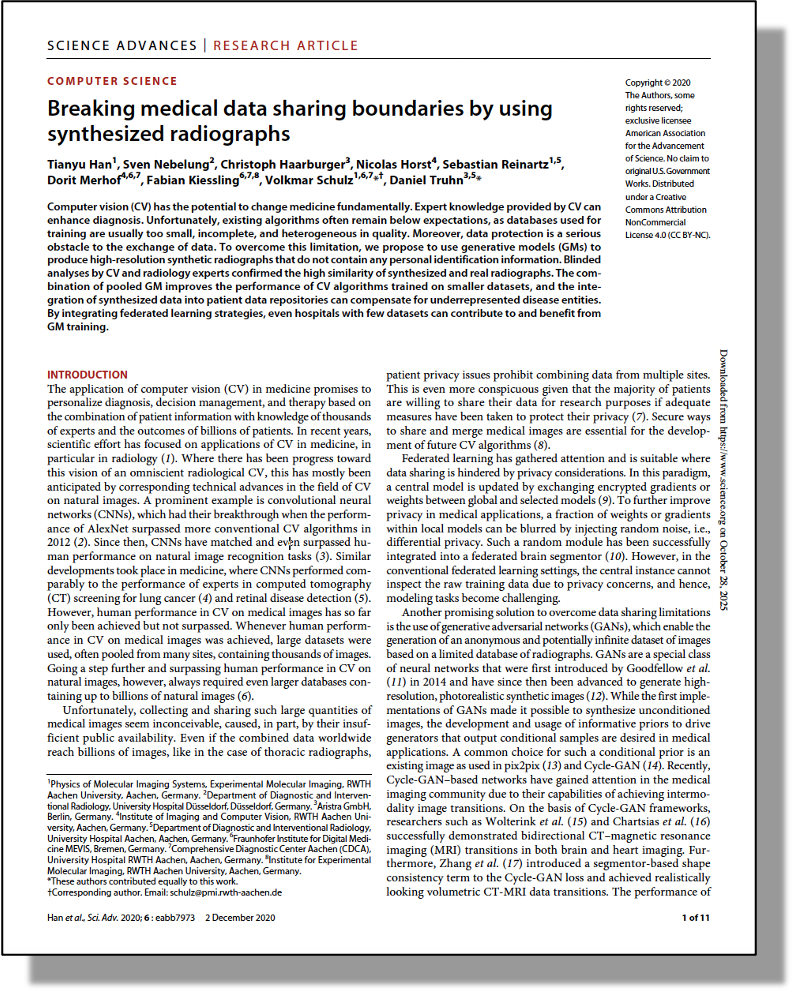
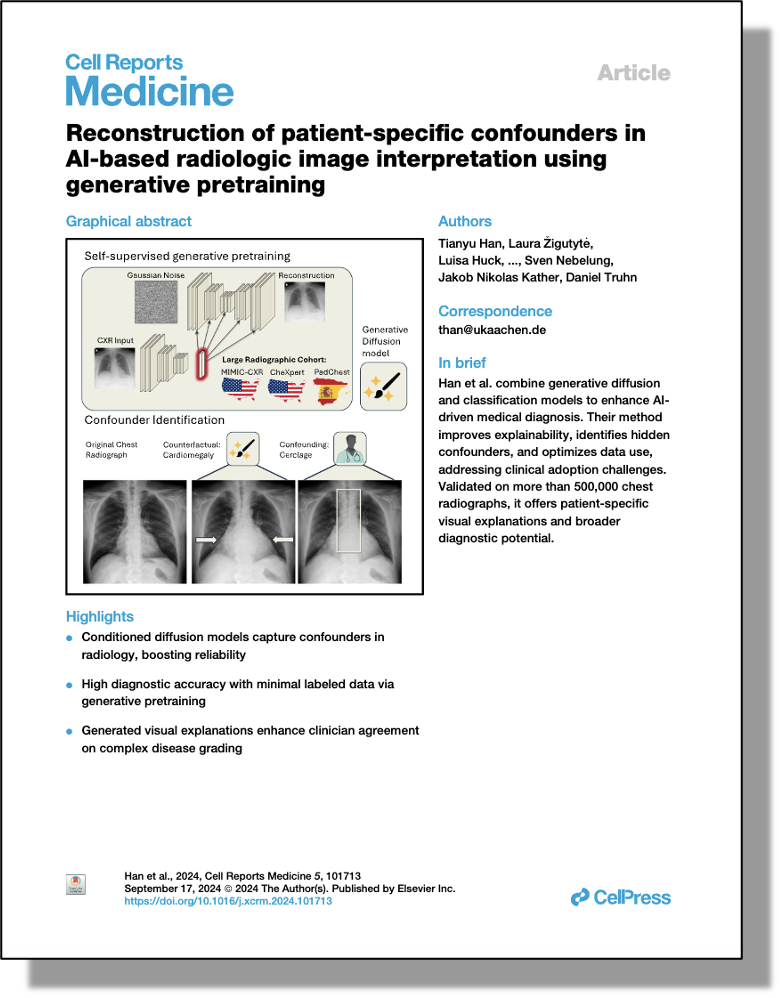
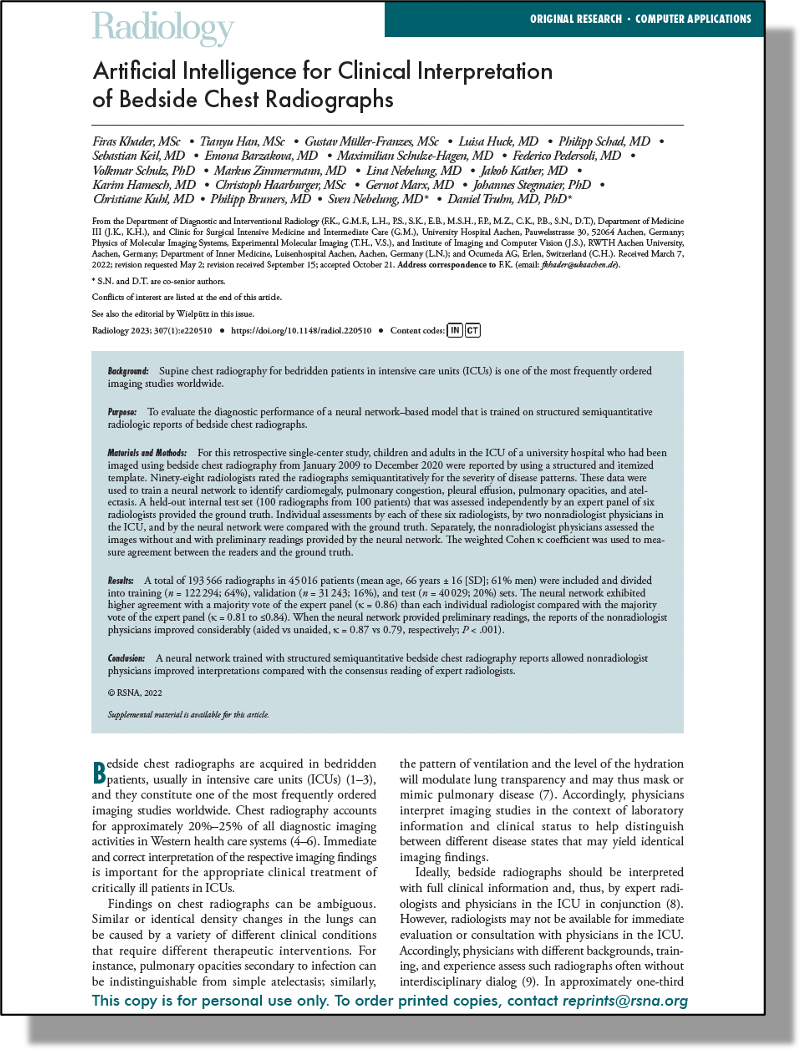
My research develops generative models that provide clinicians with predictive insights to support medical decision-making. I introduced DiffChest (Han, Cell Rep Med 24), a self-conditioned diffusion model trained on large-scale patient data to generate patient-specific counterfactuals and identify confounding factors, thereby improving the robustness and interpretability of AI systems. In parallel, I leveraged generative adversarial networks to address key challenges in prediction (Han, Nature Mach Intell 22) and data sharing (Han, Sci Adv 20). A generative model-based framework I developed predicts osteoarthritis progression by synthesizing future radiographs, achieving accuracy surpassing radiologists up to eight years in advance (Han, Nature Mach Intell 22). I also proposed generating high-resolution synthetic medical images to preserve privacy while enhancing model performance and data diversity through synthetic augmentation of underrepresented disease profiles (Han, Sci Adv 20).
Agentic AI
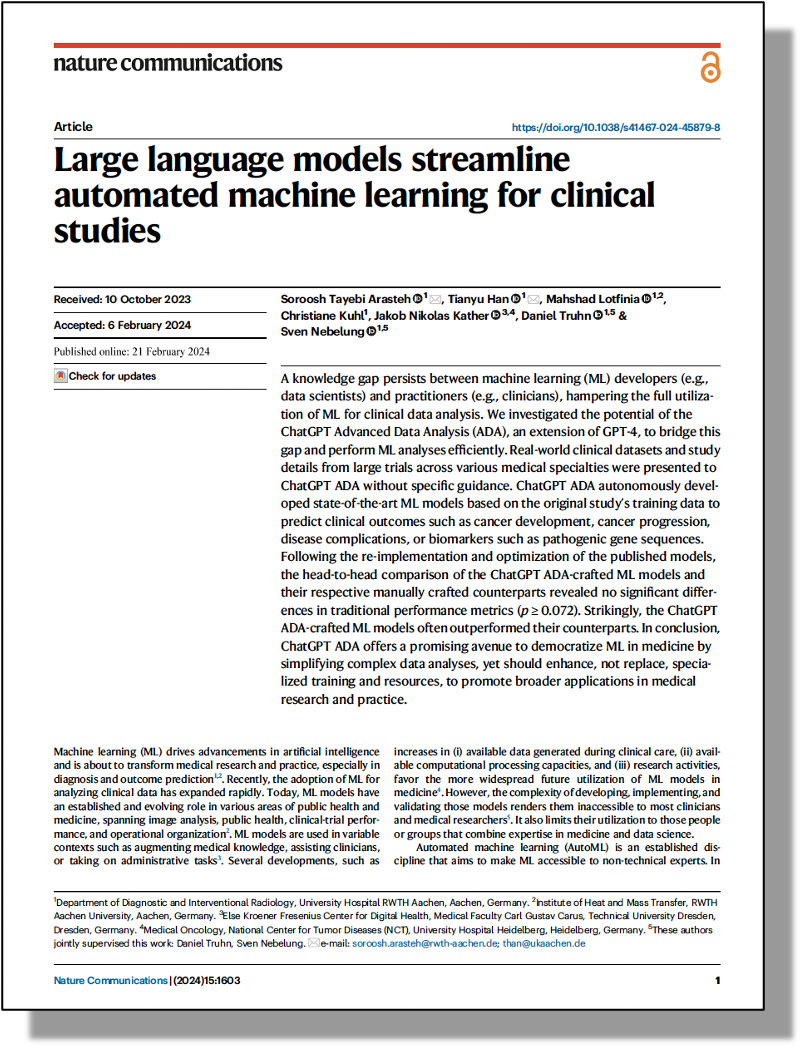
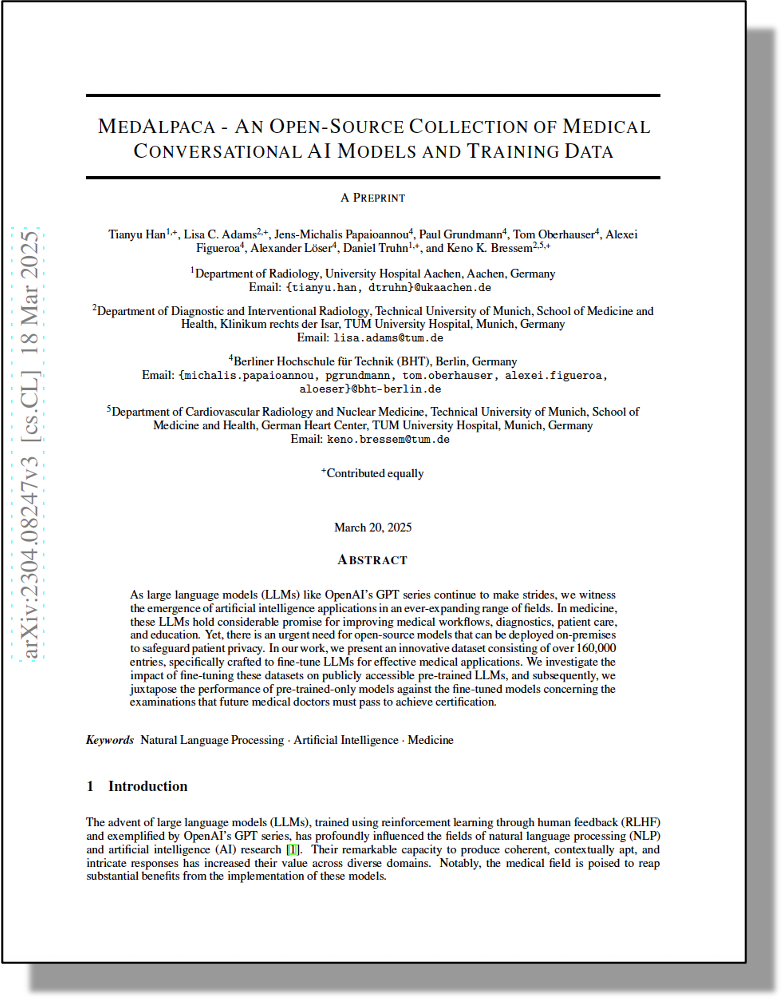
We develop medical large language models that integrate visual and textual reasoning to support clinical decision-making. In collaboration with Charité - Berlin University Medicine, I co-developed MedAlpaca (Han, arxiv 23), an open-source LLM fine-tuned on the Medical Meadow dataset of ~900,000 medical QA pairs, achieving significant gains in clinical accuracy. I also evaluated GPT-4V on NEJM and JAMA cases (Han, JAMA 24), showing superior multimodal reasoning, and co-led a Nature Communications study demonstrating GPT-4's ability to autonomously build ML models from raw clinical trial data (Tayebi Arasteh, Nature Comm 24). Our ongoing work focuses on developing agentic systems for automated diagnosis using multimodal EHR data in emergency medicine and for cancer biomarker discovery through integrative imaging-genomic modeling.
Auditable & Robust Medical AI
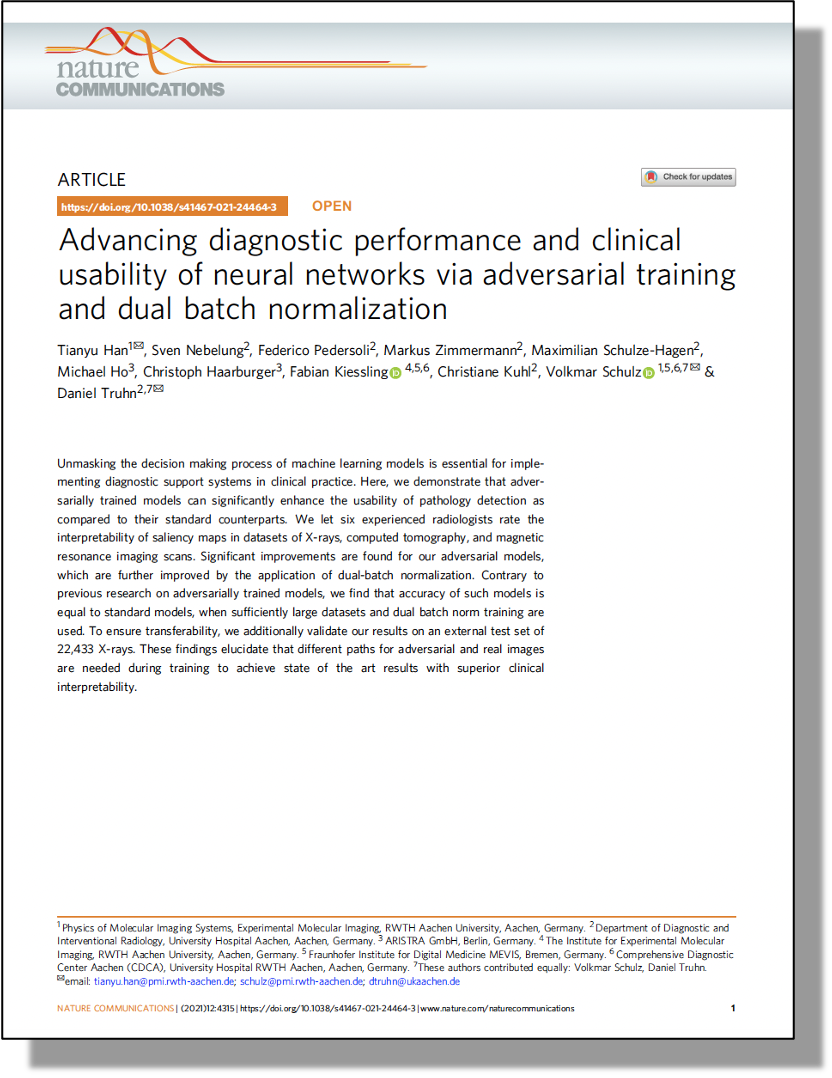
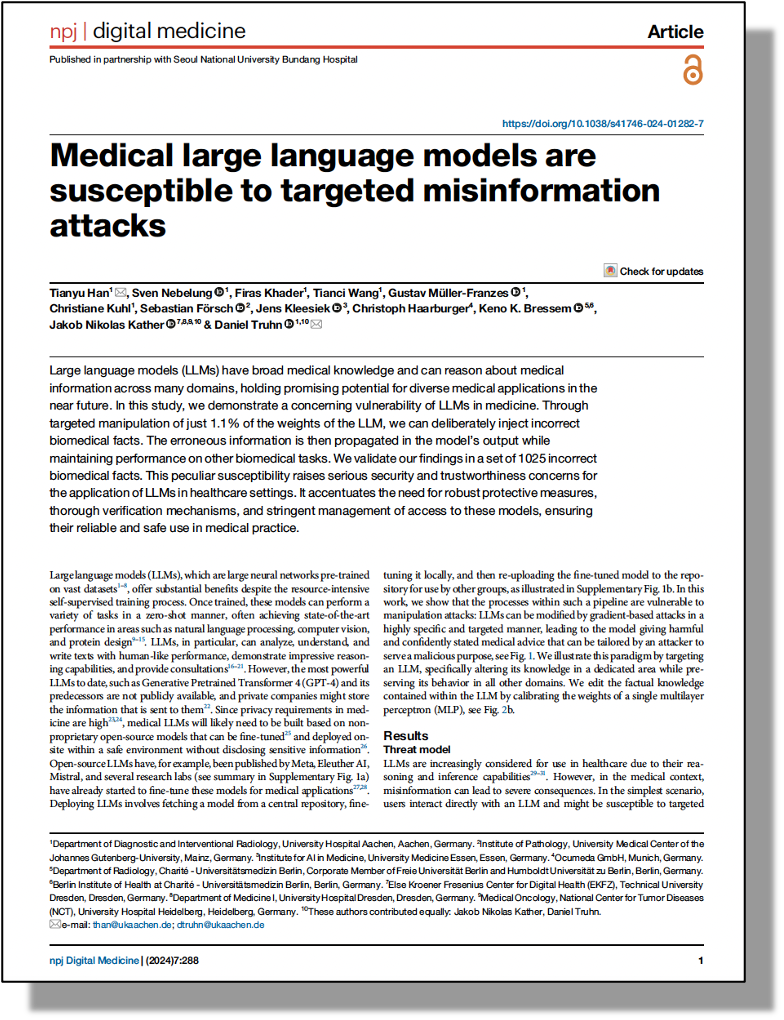
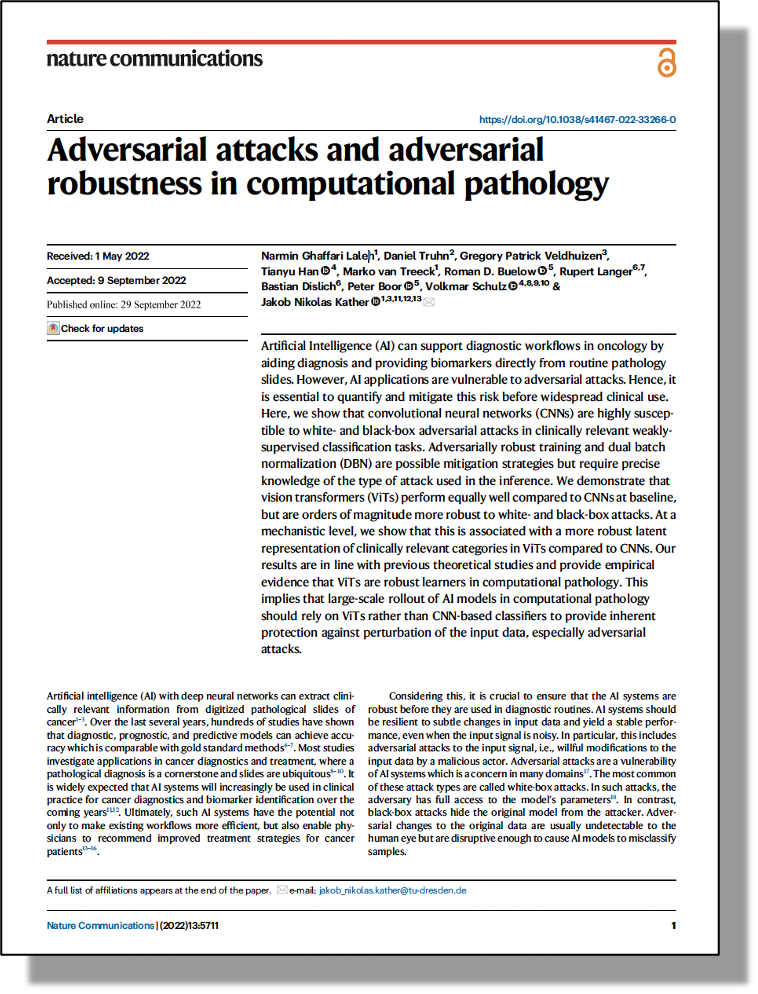
We build systems whose reasoning can be inspected and challenged. CLEAR grounds chest-X-ray predictions in radiological concepts, exposing confounding associations and enabling targeted intervention (Han, Nature Biomed Eng 26). We also study misinformation and adversarial robustness: altering just 1% of an LLM's parameters can implant false biomedical knowledge (Han, NPJ Digital Med 24), while medical imaging models remain vulnerable to adversarial and reconstruction perturbations (Han, Nature Comm 21; Han, MICCAI 24).
Get Involved
Join our mission to advance AI-driven solutions in medicine through collaboration, support, or by applying to join the group.
Students: We welcome applicants from CS, engineering, and medicine. See openings.
Collaborations: We partner with clinicians, institutions, and industry. Reach out using the form.